The History of Fort Kyk-Over-Al Guyana
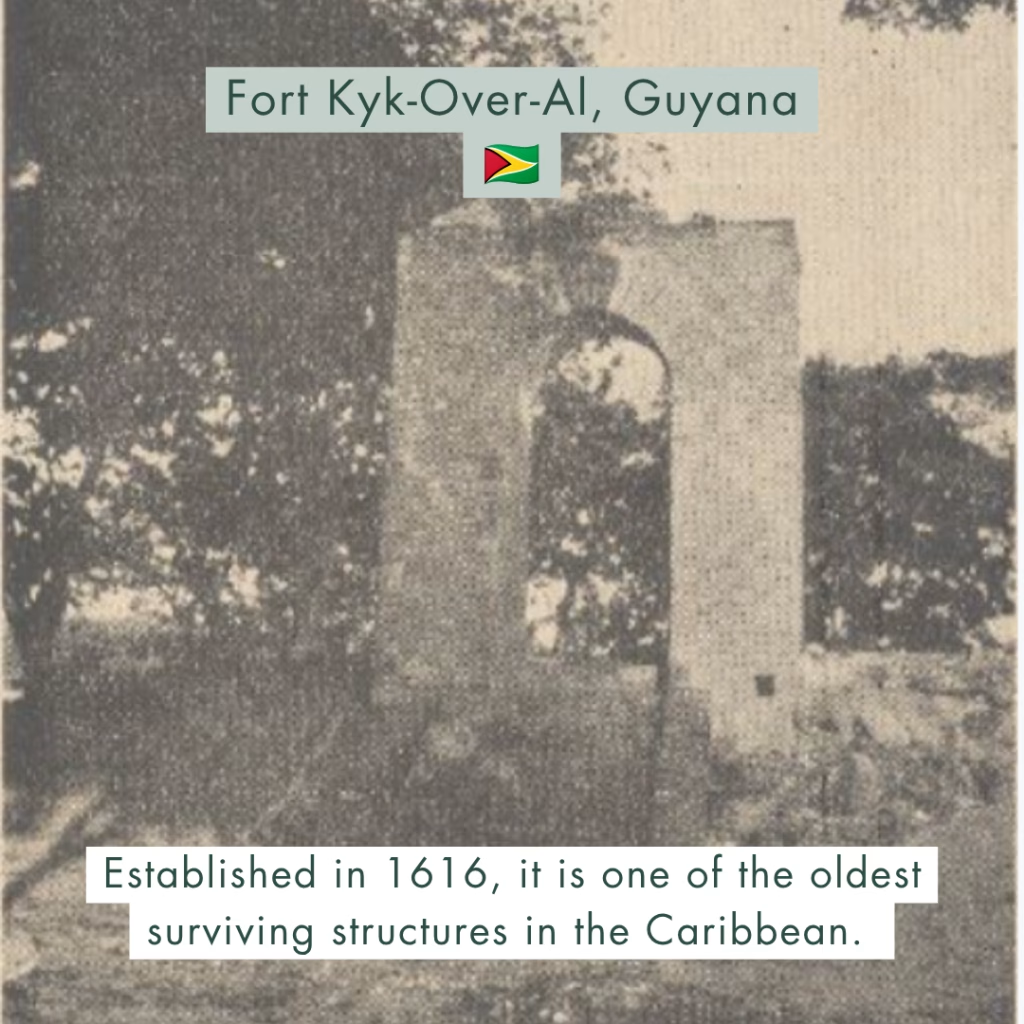
This post is about the History of Fort Kyk-Over-Al Guyana.
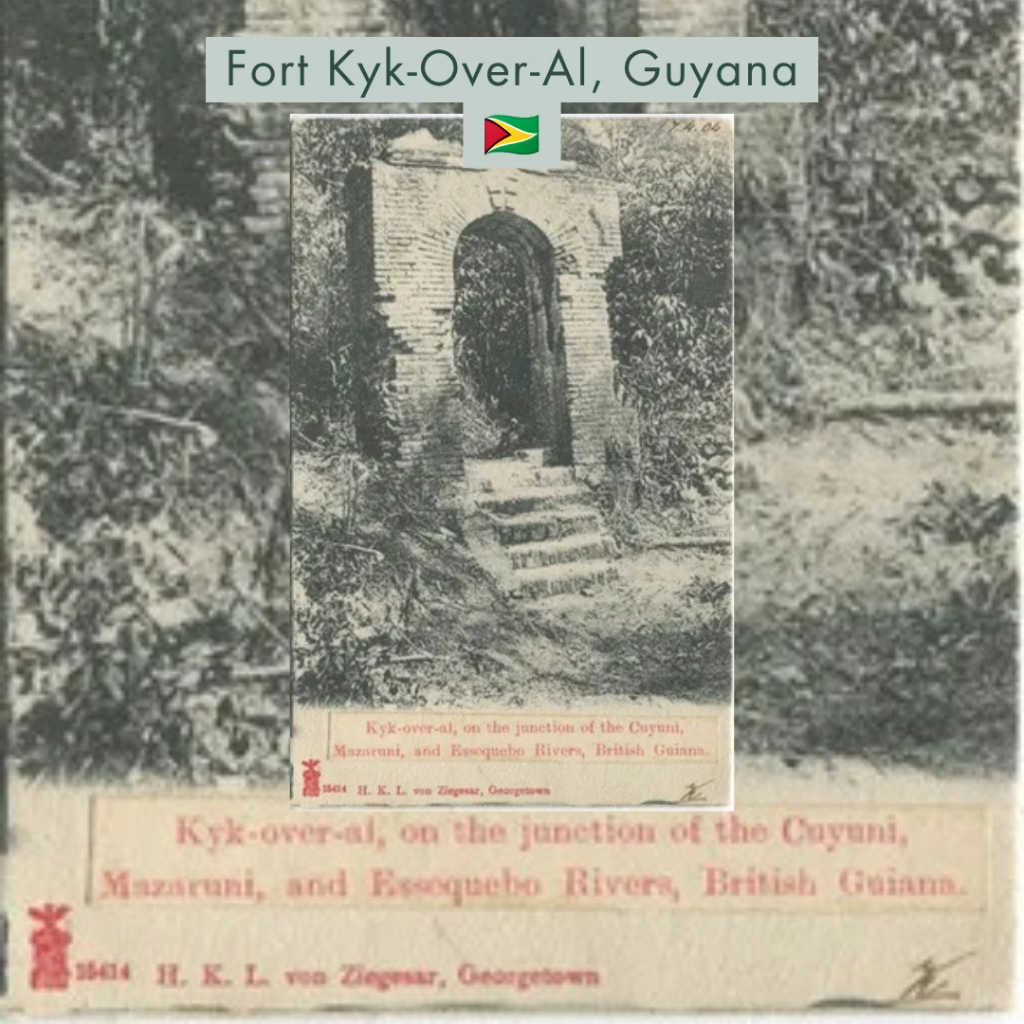
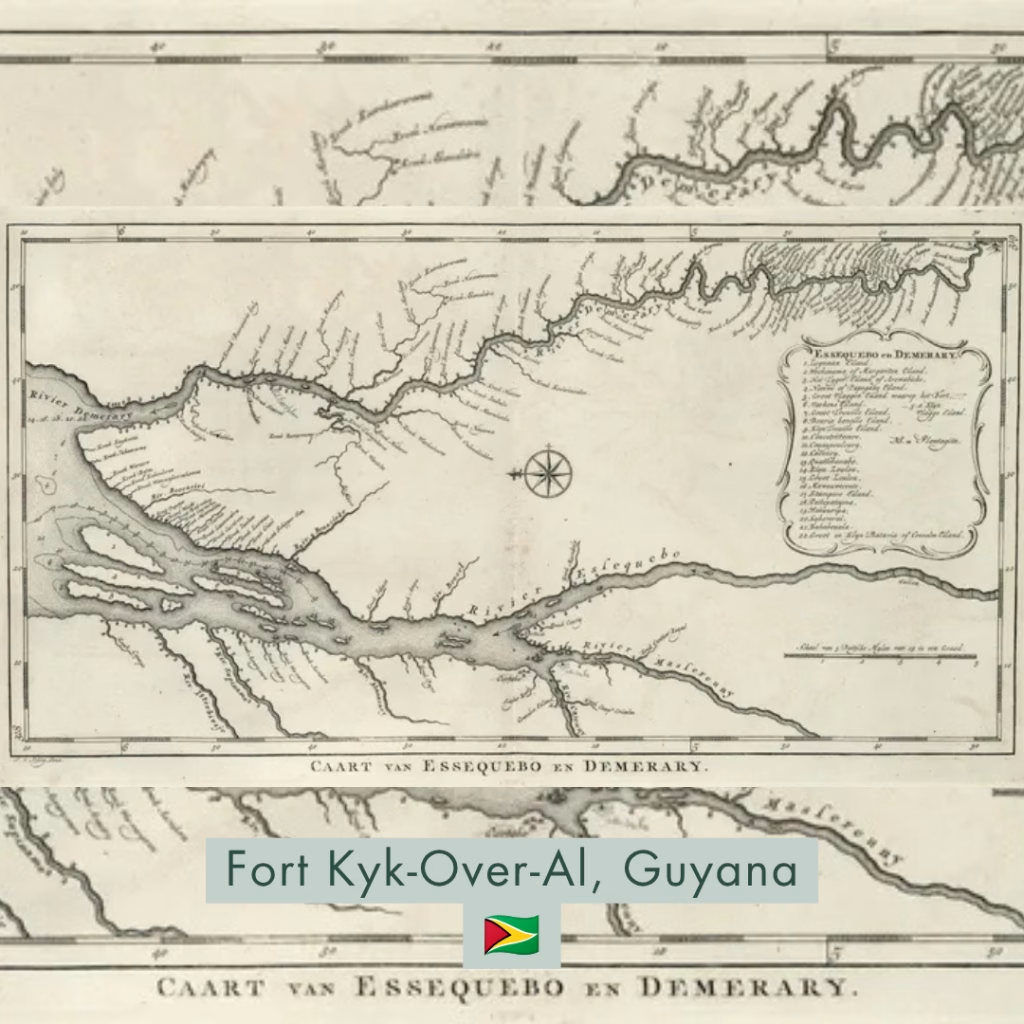
The history of Fort Kyk-Over-Al Guyana dates back to the early 17th century, making it one of the oldest European settlements in what is now Guyana. Around 1616, Dutch settlers established the fort on a small island at the junction of the Essequibo, Cuyuni, and Mazaruni Rivers. Its strategic location allowed the Dutch to oversee river traffic, defend their territory, and expand trade throughout the interior of the Guianas.
The Dutch West India Company recognized the importance of the Essequibo River as a gateway to the country's natural resources. During this period, rivers served as the primary highways, connecting coastal settlements with the interior. By constructing Fort Kyk-Over-Al, the Dutch created a military stronghold and administrative center that would shape the development of the colony for more than a century.
The name "Kyk-Over-Al" comes from the Dutch language and translates to "See Over All" or "Look Over Everything." From its elevated position, soldiers stationed at the fort could observe approaching ships from every direction, giving them a significant defensive advantage. This visibility made the fort an ideal location to monitor trade, collect taxes, and protect the colony from attacks by rival European powers.
The Capital of Dutch Essequibo
For much of the 17th century, Fort Kyk-Over-Al served as the capital of the Dutch colony of Essequibo. The Commander of Essequibo lived and governed from the fort, making it the political, military, and economic center of Dutch operations in the region.
Colonial officials managed daily affairs from the fort, including:
- Regulating trade with Indigenous communities.
- Issuing land grants to settlers.
- Overseeing plantations established along the Essequibo River.
- Coordinating defense against foreign invasions.
- Managing relations with neighboring colonies.
As European interest in South America grew, Fort Kyk-Over-Al became increasingly important to Dutch colonial ambitions.
Trade and Indigenous Partnerships
Unlike many European settlements that relied solely on agriculture, the Dutch initially focused heavily on trade. Indigenous peoples played a vital role in the success of the colony, exchanging products such as dyes, tobacco, cotton, hardwoods, and other valuable goods.
The Dutch developed commercial relationships with several Indigenous communities throughout the region. These partnerships allowed the colony to expand while giving Dutch merchants access to resources found deep within Guyana's interior.
The Essequibo River system became one of the busiest commercial corridors in the Guianas, with Fort Kyk-Over-Al serving as the central hub for river transportation and commerce.
Fort Kyk-Over-Al Guyana Conflict and Colonial Rivalries
Life at Fort Kyk-Over-Al was far from peaceful. During the 17th and 18th centuries, European powers—including the British, French, and Spanish—regularly competed for control of territories throughout the Caribbean and South America.
Because of its strategic location, Fort Kyk-Over-Al Guyana was frequently threatened by military expeditions and pirate activity. Soldiers stationed at the fort defended Dutch interests while protecting merchants traveling along the Essequibo River.
In addition to external conflicts, the colony experienced internal challenges, including labor shortages, economic fluctuations, and changing political alliances in Europe.
The Shift to Fort Zeelandia
As the colony expanded toward the coast, Dutch officials realized that Fort Kyk-Over-Al's inland location was no longer ideal for governing the growing settlement. In the mid-1700s, the administrative capital was relocated downstream to Fort Zeelandia on Fort Island.
The move reflected changing economic priorities. Coastal plantations had become increasingly important, and relocating the government closer to these agricultural operations improved communication, trade, and defense.
Although Fort Kyk-Over-Al gradually lost its political importance, it remained an important symbol of the colony's beginnings.
British Rule and the Fort Kyk-Over-Al's Decline
During the late 18th century and early 19th century, British forces assumed control of the Dutch colonies in Guyana. Over time, Fort Kyk-Over-Al was abandoned as newer settlements and administrative centers developed elsewhere.
Without regular maintenance, much of the fort deteriorated. Tropical weather, vegetation, and centuries of erosion slowly reclaimed the structure, leaving behind only portions of the original stone and brick construction.
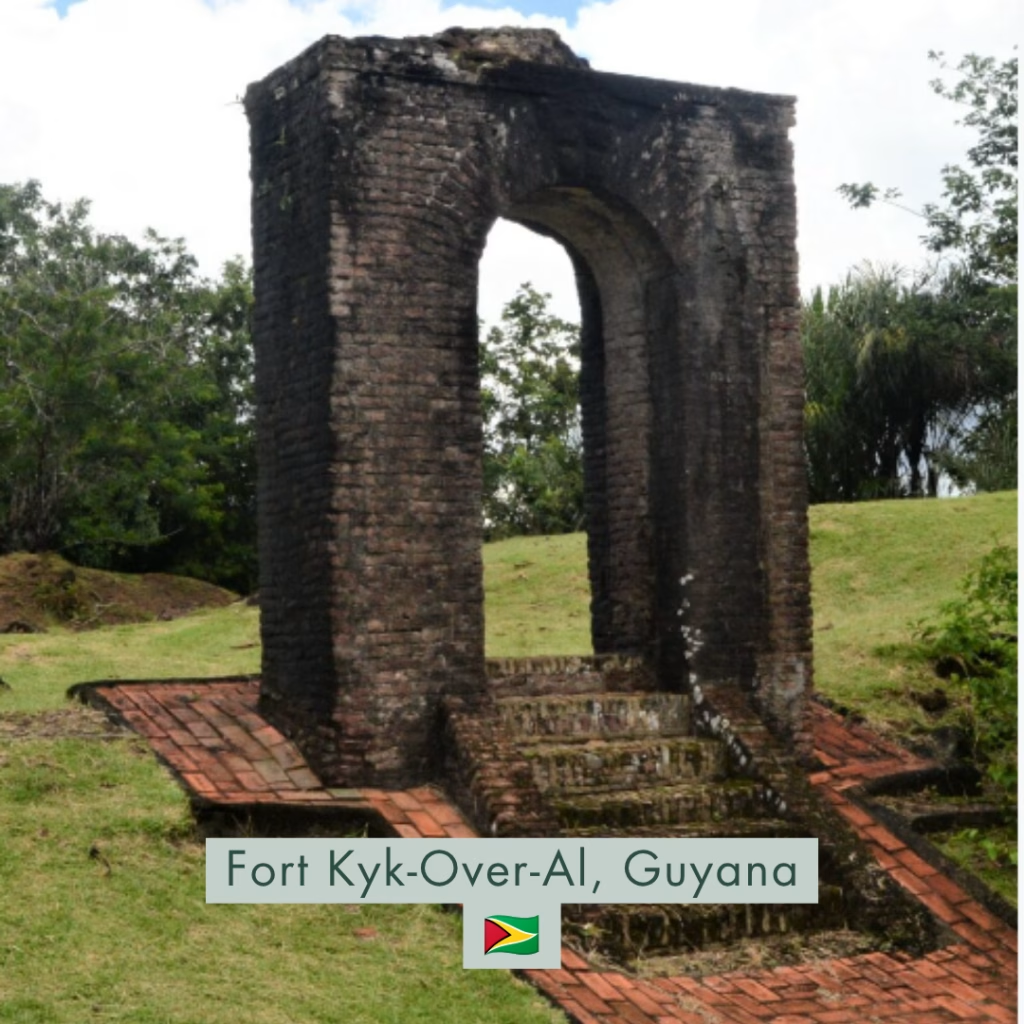
Today, the surviving brick arch stands as one of the few visible reminders of Guyana's Dutch colonial era.
Fort Kyk-Over-Al Guyana Archaeological and National Significance
Today, Fort Kyk-Over-Al is recognized as one of Guyana's most important historic landmarks and has been designated a National Monument. Archaeologists have uncovered artifacts including pottery, bricks, bottles, tools, and other remnants that offer valuable insight into daily life during the Dutch colonial period.
These discoveries help historians better understand:
- Early European settlement in Guyana.
- Colonial architecture and engineering.
- Trade networks throughout the Guianas.
- Military defense strategies.
- Interactions between Dutch settlers and Indigenous peoples.
For anyone interested in Guyana history, Dutch colonial history, or historic sites in Guyana, Fort Kyk-Over-Al remains an essential destination and an enduring symbol of the nation's origins.
Why the History of Fort Kyk-Over-Al Guyana Matters Today
The story of Fort Kyk-Over-Al Guyana is more than a tale of bricks and stone—it is the story of how modern Guyana began to take shape. The fort witnessed centuries of exploration, trade, diplomacy, conflict, and cultural exchange that influenced the country's development.
Whether you're researching Fort Kyk-Over-Al history, planning to visit one of the most important historical landmarks in Guyana, or simply exploring the nation's rich heritage, this remarkable site offers a fascinating glimpse into Guyana's colonial past and the people who helped shape its future.
Frequently Asked Questions About Fort Kyk-Over-Al Guyana
Where is Fort Kyk-Over-Al located in Guyana?
Fort Kyk-Over-Al is located on a small island where the Essequibo, Cuyuni, and Mazaruni Rivers meet in Region 7 (Cuyuni-Mazaruni), Guyana. Its strategic location made it an ideal site for the Dutch to monitor trade and defend their colony during the 17th century.
What does "Kyk-Over-Al" mean?
"Kyk-Over-Al" is Dutch for "See Over All" or "Look Over Everything." The name reflects the fort's elevated position, which gave Dutch soldiers a clear view of the surrounding rivers and approaching vessels.
When was Fort Kyk-Over-Al built?
Fort Kyk-Over-Al was established around 1616 by Dutch settlers, making it one of the oldest European settlements in present-day Guyana. It served as the administrative center of the Dutch colony of Essequibo for many years.
Why is Fort Kyk-Over-Al important?
Fort Kyk-Over-Al is one of Guyana's most significant historical landmarks because it served as the capital of the Dutch colony of Essequibo. It played a vital role in colonial government, military defense, river trade, and relations with Indigenous communities, helping shape the country's early history.
Can you visit Fort Kyk-Over-Al?
Yes. Fort Kyk-Over-Al can be visited by boat as part of a river tour through the Essequibo region. Many visitors combine a stop at the fort with trips to Bartica, Fort Island, and other historical and eco-tourism attractions nearby.
What remains of Fort Kyk-Over-Al today?
Although much of the original structure has disappeared over time, visitors can still see the iconic brick arch and portions of the original foundation. The site is protected as a National Monument and remains an important archaeological and cultural landmark.
Was Fort Kyk-Over-Al the first capital of Guyana?
No. However, Fort Kyk-Over-Al was the administrative capital of the Dutch colony of Essequibo long before Guyana became an independent nation. It was later replaced by Fort Zeelandia on Fort Island as the colony expanded closer to the coast.
Why did the Dutch build Fort Kyk-Over-Al?
The Dutch built Fort Kyk-Over-Al to protect their settlement, oversee trade along the Essequibo River, defend against rival European powers, and establish a government center for the colony of Essequibo.
Is Fort Kyk-Over-Al a National Monument?
Yes. Fort Kyk-Over-Al is recognized as a National Monument of Guyana because of its historical, cultural, and archaeological significance. It is one of the country's most important reminders of the Dutch colonial era.
What are some nearby attractions to Fort Kyk-Over-Al?
Visitors exploring Fort Kyk-Over-Al often visit nearby destinations such as Bartica, Fort Island, the Essequibo River, the Mazaruni River, the Cuyuni River, and several Indigenous communities. The region is also known for fishing, birdwatching, river cruises, and eco-tourism experiences.
This post was about the History of Fort Kyk-Over-Al Guyana.
By Melissa R. | This content is copyright of West Indian Diplomacy, LLC and may not be reproduced without permission.
She runs West Indian Diplomacy, a Caribbean blog aimed at promoting West Indian history and business in the global marketplace. Melissa has been an attorney for over 10 years. She currently focuses on trademark registration, trademark searches, and office actions. She also has extensive legal experience in the areas of trademarks, copyrights, contracts, and business formations. She owns her own Trademark Law Firm that is virtually based in Florida.
Legal Disclaimer
Your use of the content on this site or content from our email list is at your own risk. The use of this website does not create an attorney-client relationship. West Indian Diplomacy does not guarantee any results from using this content and it is for educational purposes only. It is your responsibility to do your own research, consult, and obtain a professional for your medical, legal, financial, health, or other help that you may need for your situation.
The information on West Indian Diplomacy is “as is” and makes no representations or warranties, express or implied, with respect to the content provided on this website or on any third-party website which may be accessed by a link from this Web site, including any representations or warranties as to accuracy, timeliness, or completeness. West Indian Diplomacy will not be liable for any losses, injuries, or damages from the display or use of this information.
All information on this website is accurate and true to the best of West Indian Diplomacy's knowledge, but there may be omissions, errors or mistakes. West Indian Diplomacy is not liable for any damages due to any errors or omissions on the website, delay or denial of any products, failure of performance of any kind, interruption in the operation and your use of the website, website attacks including computer virus, hacking of information, and any other system failures or misuse of information or products.
As of this date, West Indian Diplomacy does not write sponsored posts or accept free products for review. All thoughts and opinions written by West Indian Diplomacy is our own.
West Indian Diplomacy welcomes comments on blog posts. All comments submitted to us are the opinions of the author and do not necessarily reflect or represent the views, policies, or positions of this site. We reserve the right to use our own discretion when determining whether or not to remove offensive comments or images.